
In diesem Video berichtet der investigative Journalist und Menschenrechtsanwalt Dimitri Lascaris aus Teheran, Iran, vom Standort eines beschädigten Sportkomplexes und einer Fußballanlage, wo er die sichtbaren Zerstörungen dokumentiert und mit dem Leiter des Komplexes sowie Anwohnern über den Angriff und dessen Folgen spricht. Der Bericht befasst sich mit dem Zustand des Geländes, zahlreichen Raketenangriffen auf […]
Der Beitrag BERICHT AUS IRAN: US-israelische Angriffe zerstören Orte für Jugendliche erschien zuerst auf acTVism.
In diesem Bericht aus dem Iran dokumentiert der investigative Journalist und Menschenrechtsanwalt Dimitri Lascaris die Folgen der Angriffe in Täbris. Vor Ort spricht er mit Betroffenen, Rettungskräften und Angehörigen von Opfern und zeigt die Auswirkungen des Krieges auf das Leben von Zivilisten. Die Aufnahmen reichen von zerstörten Wohnhäusern bis zu persönlichen Schicksalen, die den Konflikt […]
Der Beitrag BERICHT AUS IRAN: Zerstörte Häuser, tote Kinder nach US-israelischen Angriffen erschien zuerst auf acTVism.
In seinem zweiten Bericht aus dem Iran schildert der investigative Journalist und Menschenrechtsanwalt Dimitri Lascaris seine Eindrücke aus Teheran, wo sich Zehntausende Menschen zum Eid al Fitr in der Mosalla Moschee versammeln, während im Land Krieg herrscht. Vor Ort zeigt sich eine Atmosphäre, die viele überraschen dürfte. Statt Angst dominieren Entschlossenheit, religiöser Glaube und eine […]
Der Beitrag BERICHT AUS IRAN: Mitten im Krieg – keine Angst in Teheran erschien zuerst auf acTVism.
In seinem ersten Bericht aus dem Iran während des laufenden Krieges schildert der Menschenrechtsanwalt und Journalist Dimitri Lascaris seine Eindrücke direkt vor Ort in Täbris — doch das, was er dort erlebt, passt nicht zu dem, was viele erwarten würden: keine sichtbaren Kampfhandlungen, keine Panik, sondern ein Alltag, der Fragen aufwirft. Wie kann das sein, […]
Der Beitrag BERICHT AUS IRAN: Die Realität im Krieg ist anders als gedacht erschien zuerst auf acTVism.
In diesem Video, das exklusiv auf Deutsch auf unserem Kanal veröffentlicht wird, untersucht der mit dem Pulitzer-Preis ausgezeichnete Journalist Glenn Greenwald zwei aktuelle Medienauftritte zum Iran-Krieg, bei denen auffällige Parallelen zu bekannten Mustern aus früheren Konflikten sichtbar werden: Argumente, Narrative und sogar vertraute Stimmen wirken überraschend ähnlich, während der Fokus bewusst auf den Aussagen selbst […]
Der Beitrag Iran-Krieg: US Medien verkaufen wieder das Irak-Skript erschien zuerst auf acTVism.
Im Wolfsburger Stammwerk vertreibt der Geruch von Unsicherheit das "Wir"-Gefühl der Mitarbeiter: Volkswagen will in Deutschland bis 2030 rund 50.000 Stellen streichen – etwa jeden sechsten Arbeitsplatz im Konzern. Offiziell soll das ohne betriebsbedingte Kündigungen geschehen, doch Betriebsrat und IG Metall sprechen von einem "Maxi-Sparplan" auf Kosten der Beschäftigten, während die Eigentümerfamilien – allen voran der Porsche-Piëch-Clan – längst neue Profitchancen in der Rüstungsindustrie sondieren.
Bilanz mit Folgen: 50.000 Jobs wenigerVolkswagen hat auf der Jahrespressekonferenz und im Geschäftsbericht bestätigt, dass im Konzern in Deutschland bis 2030 rund 50.000 Stellen wegfallen sollen. Etwa 35.000 davon entfallen auf die Kernmarke VW, weitere Tausende auf Audi, Porsche und die Software-Tochter Cariad. Der Abbau wird als "sozialverträglich" verkauft, weil er über Altersteilzeit und Abfindungen erfolgen soll, doch der Einschnitt ist historisch: In den deutschen Werken verliert damit etwa jeder sechste Beschäftigte seine Perspektive. Während die Belegschaft schrumpft, bleiben die millionenschweren Boni für Vorstandschef Oliver Blume und andere Topmanager weitgehend unangetastet. (1)
Der Nettogewinn von VW ist 2025 deutlich gefallen, auf rund 6,9 Milliarden Euro, doch der Umsatz blieb mit gut 320 Milliarden Euro nahezu stabil – von einer existenziellen Krise kann keine Rede sein. Über die letzten Jahre summierten sich die Profite auf mehrere Dutzend Milliarden Euro, aus denen zweistellige Milliardenbeträge an die Eigentümer, allen voran den Porsche-Piëch-Clan, geflossen sind. (2)
Maxi-Sparprogramm auf dem Rücken der BelegschaftenHinter den Zahlen steht ein Maxisparprogramm, das sich in nüchternen Kennziffern ausdrückt: Jährlich sollen rund 6 Milliarden Euro eingespart werden, insgesamt ist von bis zu 60 Milliarden Euro Kostenreduzierung die Rede. Offiziell laufen diese Maßnahmen unter eingeführten Programmen zur "Performance-Steigerung" und "Effizienzverbesserung" in allen Marken und Gesellschaften des Konzerns.
In der Praxis greifen unterschiedliche Hebel: Altersteilzeit, Vorruhestandsangebote, Abfindungsprogramme, Nichtverlängerung von Leiharbeit, das Auslaufen befristeter Verträge sowie interne Verlagerungen in andere Standorte oder Länder. Beschäftigte berichten von wachsender Arbeitsverdichtung, während Teams schrumpfen – ohne dass die öffentliche Kommunikation diese schleichende Form des Stellenabbaus offen benennt. (3)
Betriebsrat: Schutzschirme mit doppeltem BodenDer Gesamt- und Konzernbetriebsrat verweist auf den im Dezember 2024 ausgehandelten Kompromiss: bis Ende 2030 keine betriebsbedingten Kündigungen und keine Werksschließungen bei VW in Deutschland. Betriebsratschefin Daniela Cavallo bekräftigt diese Linie öffentlich und weist Berichte zurück, die von angeblichen Plänen zur Schließung ganzer Standorte sprechen. Doch diese Schutzschirme gelten vor allem für die Stammbeschäftigten mit unbefristeten Verträgen. Leiharbeiter, Beschäftigte bei Dienstleistern und befristet Angestellte sind weit weniger abgesichert und werden oft als "Puffer" genutzt. Zudem war der Kompromiss teuer: Die Belegschaft leistete über Verzicht auf Leistungen und Flexibilisierungen einen Beitrag in Milliardenhöhe, um dem Konzern Investitionsspielraum zu verschaffen – und sieht nun, dass trotzdem 50.000 Stellen abgebaut werden sollen. (4)
Die IG Metall pocht auf die Gültigkeit der vereinbarten Regelungen und betont, dass der Ausschluss betriebsbedingter Kündigungen tariflich festgeschrieben ist. Gleichzeitig steht die Gewerkschaft unter Druck: Die Basis erwartet, dass Zusagen zum Beschäftigungsschutz auch in der Realität Bestand haben, während das Management immer neue Sparziele formuliert.
In den Werken wächst der Unmut, weil viele Beschäftigte bereits in früheren Runden auf Teile ihres Einkommens und ihrer Sicherheiten verzichtet haben, um Zukunftsprojekte zu ermöglichen. Nun erleben sie, dass diese Opfer nicht verhindern, sondern den Boden für einen noch größeren Personalabbau bereiten.
Die klassische Sozialpartnerschaft, in der Konflikte in geregelten Bahnen und mit einem gewissen Interessenausgleich verliefen, existiert zwar noch formal, ist aber angesichts der jüngsten Zuspitzungen im Verhältnis zwischen VW‑Konzern und IG Metall offenkundig vorbei. Wie selbst die IG Metall im Zusammenhang mit den von VW durchgesetzten Sparprogrammen und der Aufkündigung tariflicher Zusagen einräumt, sind zentrale Elemente dieses Modells faktisch außer Kraft gesetzt
Zölle, Porsche, China – die offizielle KrisenerzählungDie Konzernführung verweist auf ein Bündel externer Faktoren: US-Importzölle, die den Gewinn um Milliarden schmälern; die verfehlte Strategie bei der Tochter Porsche, deren Festhalten an Verbrenner-Luxusmodellen zu hohen Abschreibungen geführt hat; sowie den Einbruch des China-Geschäfts, wo VW beim Übergang zur Elektromobilität gegen neue Wettbewerber ins Hintertreffen geraten ist. Diese Faktoren sind real, verschleiern aber, dass es sich zugleich um das Ergebnis unternehmerischer und politischer Fehlentscheidungen handelt. Die Risiken der Zölle waren absehbar, der Kampf um eine Verlängerung der Verbrenner-Ära war eine bewusste Wette, die nun aufging – allerdings zu Lasten der Bilanz und damit der Beschäftigten. Statt dass die geschäftsführende Ebene Verantwortung übernimmt, wird der Preis in Form von Stellenabbau und Einschnitten bei den Belegschaften eingetrieben. (5)
Die Management-Etage agiert dabei zwangsläufig als "strategisches Zentrum des Kapitals", dem die Funktion zukommt, die Ausbeutungsrate zu sichern und die Profitabilität gegenüber den Eigentümern zu garantieren. Seine Entscheidungen – ob in der Modellpolitik, im Umgang mit Handelsrisiken oder in der Personalplanung – folgen nicht einer "betriebswirtschaftlichen Rationalität" im Allgemeinen, sondern der Logik der Kapitalverwertung. In diesem Rahmen ist das Management folglich gezwungen, auf Krisenerscheinungen mit der Intensivierung der Arbeitsausbeutung zu reagieren: durch Rationalisierung, Kostensenkung und Entlassungen.
Stimmen aus den Werken: Zwischen Stolz und AbstiegsangstIn den Werksstädten ist Volkswagen mehr als ein Arbeitgeber – der Konzern prägt Biografien, Familiengeschichten und ganze Regionen. Viele Beschäftigte verbinden mit VW einen Stolz auf industrielle Leistungsfähigkeit, aber auch ein Sicherheitsversprechen, das jetzt brüchig wird.
"Wir machen seit Jahren mit: Mehr Schichten, mehr Flexibilität, weniger Zuschläge. Und am Ende heißt es doch: Eure Jobs sind zu teuer." Eine VW-Kollegin
Das macht deutlich, dass es hier nicht um betriebswirtschaftliche Kennziffern geht, sondern um ein politisch-ökonomisches Verhältnis: Unter den Bedingungen kapitalistischer Konkurrenz wird die Belegschaft systematisch auf eine Variable der Profitrate reduziert. Eine Austeritäts-Politik aus dauernden Sparrunden, Personalabbau und Lohnstagnation zersetzt als Folge nicht zufällig das Vertrauen der Lohnabhängigen, sondern ist Ausdruck des Klassencharakters der Unternehmensstrategie. Die Belegschaften sollen in einen Zustand permanenter Unsicherheit versetzt werden, in dem die Drohung mit weiteren Kürzungen als Disziplinierungsinstrument wirkt und die Unterordnung unter die Profitlogik erzwingt. (6)
Porsche-Piëch-Clan: Krisenlösung RüstungsindustrieWährend die Beschäftigten um ihre Zukunft bangen, bleibt die Eigentümerseite bemerkenswert unsichtbar – öffentlich. Der Porsche-Piëch-Clan, der maßgeblichen Einfluss auf den Konzern hat und jedes Jahr enorme Dividenden kassiert, richtet den Blick längst auf neue, vermeintlich krisensichere Geschäftsfelder. Die Rüstungsindustrie spielt dabei eine zentrale Rolle. Historisch war der Name Porsche schon in der NS-Zeit mit Panzerentwicklung verknüpft, heute öffnen Aufrüstung und militärische "Mobilität" neue Märkte: militärische Spezialfahrzeuge, Logistikflotten, dual-use-Technologien und Kooperationen mit etablierten Rüstungskonzernen. In regionalen Standortkonzepten wird Rüstungsproduktion ausdrücklich als Option benannt und politisch positiv begleitet – ein deutliches Signal, wohin die Reise aus Sicht des Kapitals gehen könnte. (7)
Autoindustrie im Umbau – Profite nach oben, Lasten nach untenDie Entwicklung bei VW ist Teil einer Strukturkrise der deutschen Autoindustrie. Die Produktion ist seit Jahren rückläufig, Werke sind unterausgelastet, Zulieferer verlieren massiv Arbeitsplätze. Zugleich steigt die Produktivität, und der Übergang zu Elektroantrieben reduziert den Bedarf an klassischen mechanischen Komponenten deutlich.
Statt langfristiger Konversionsstrategien – etwa hin zu öffentlichem Verkehr, Bahn- und; oder anderen zivilen Zukunftsbranchen – dominiert ein Muster aus Arbeitsplatzabbau, Standortverlagerung in Länder mit niedrigeren Löhnen und wachsender Rüstungsorientierung. Für die Belegschaften bedeutet das: mehr Unsicherheit, mehr Druck, weniger Perspektive – während die Eigentümerseite ihre Investments in profitablere, auch militärische Bereiche verschiebt. (8)
Klassenstrategie statt betriebswirtschaftlicher SachzwangDer Umbau von Volkswagen ist keine alternativlose betriebswirtschaftliche Notmaßnahme, sondern eine politische Entscheidung mit Klassencharakter. Ein Konzern mit Milliardenrücklagen und starkem politischen Gewicht entscheidet sich dafür, die "Transformation" über Massenstellenabbau und den Einstieg in rüstungsnahe Geschäfte zu finanzieren – nicht über eine Umverteilung der Lasten nach oben oder über eine verbindliche Konversion zu gesellschaftlich sinnvoller, ziviler Produktion.
Damit stellt sich die grundsätzliche Aufgabe, Konzerne wie VW nicht den weitgehend ungebremsten Weg von Militarisierung und Abbau von Industriearbeitsplätzen bestimmen zu lassen, sondern eine gesellschaftliche Intervention durchzusetzen, die Beschäftigungssicherung, Umverteilung und friedliche Produktion zur verbindlichen Bedingung jeder künftigen Industriepolitik macht.
-----------------
Fußnoten
(1) https://www.volkswagen-group.com/de/geschaeftsbericht-und-ergebnisse-geschaeftsjahr-2025-20174
https://web.de/magazine/auto/volkswagen-konzern-ursachen-alarmierenden-gewinneinbruchs-41993334
(2) https://test.rtde.website/inland/272745-vw-streicht-50000-jobs-bis/
(5) Vgl. IG Metall bei VW: "Medienbericht über neues Sparprogramm und Werksschließungen – das sagt Daniela Cavallo", 16.2.2026; sowie die Kritik der IG Metall an der Aufkündigung des Zukunftstarifvertrags und der Sozialpartnerschaft bei VW.
Karl Marx: Das Kapital. Kritik der politischen Ökonomie. Erster Band. Buch I: Der Produktionsprozess des Kapitals (MEW 23), insbesondere Kap. 11 "Kooperation", zur spezifischen Form kapitalistischer Leitung und des Kommandos über die Arbeit.
(7) https://stephankrull.info/2026/03/07/volkswagen-betriebsratsvorsitzende-auf-abwegen/
https://stephankrull.info/2025/08/10/vw-werk-osnabrueck-vor-der-entscheidung-panzer-oder-kleinbus/
Das „Sondervermögen für Infrastruktur und Klimaneutralität“ hat die CDU/SPD-Regierungskoalition vor einem Jahr der Öffentlichkeit als "Jahrhundertprogramm" verkauft, als nie dagewesene Investitionsoffensive für Straßen, Schienen, Netze und Klimaschutz. Aktuell entpuppt sich der politisch herbeigeredete 500‑Milliarden‑Wunderfonds als das, was von Anfang an zu vermuten war: ein gigantischer "Verschiebebahnhof", um die Schuldenbremse politisch zu sanktionieren und gleichzeitig so zu tun, als würde die Regierung in die Zukunft investieren. (1)
Die Fakten sind erdrückend: 2025 wurden im Rahmen des Sondervermögens 24,3 Milliarden Euro an neuen Krediten aufgenommen. Die tatsächlichen Investitionen des Bundes lagen am Ende nur bei etwa 1 bis 2 Milliarden Euro über dem Niveau von 2024 – inflationsbereinigt eine Stagnation: die deutsche Wirtschaft tritt auf der Stelle, es gibt kaum oder gar kein Wachstum. Das Institut der deutschen Wirtschaft (IW) kommt zu dem Befund, dass 86 Prozent der Mittel nicht in zusätzliche Investitionen geflossen sind, das ifo‑Institut beziffert den Anteil der zweckentfremdeten neuen Schulden sogar auf 95 Prozent.
In Klartext übersetzt heißt das: Fast das gesamte kreditfinanzierte "Zukunftspaket" wurde darauf verwendet, Löcher im Kernhaushalt zu stopfen – Löcher im sozialen und öffentlichen System, die überhaupt nur entstanden sind, weil eine strikt an der Schuldenbremse ausgerichtete Austeritätspolitik diese Bereiche systematisch ausgetrocknet hat.
Die Zahlen belegen keine Fehlsteuerung, sondern markieren die Ausrichtung der CDU/SPD-Regierungspolitik. Die Regierung ersetzt geplante Investitionen im Kernhaushalt durch Mittel aus dem Sondervermögen. Offiziell handelt es sich dabei um "zusätzliche" Ausgaben, faktisch werden aber bestehende Posten ausgelagert und umetikettiert.
Während die Regierung im Kernhaushalt die Fessel der Schuldenbremse noch enger zieht, dient das sogenannte "Sondervermögen" als ein Instrument, um die Logik der Sparpolitik unter veränderten Bedingungen fortzuschreiben und kapitalfreundlich zu reorganisieren. Die angewandte Austeritätspolitik ist darauf ausgerichtet, den Staatshaushalt dauerhaft der Verwertungslogik des Kapitals zu unterwerfen, d.h. Investitionen werden nur dort ermöglicht, wo sie privatwirtschaftliche Rentabilität versprechen. Sozialstaatliche und öffentliche Ausgaben hingegen werden systematisch beschnitten, um die Profitbedingungen des Kapitals zu sichern und Löhne sowie die sozialen Reproduktionskosten einzuschränken. Ausgerechnet IW und ifo, zwei zentrale Stichwortgeber einer unternehmensnahen Angebotspolitik, schlagen Alarm und legen mit ihren Berechnungen offen, wie wenig von der groß angekündigten Modernisierung übrigbleibt.
Ihre Kritik zielt nicht auf die Schuldenbremse als solche – ihre Kritik richtet sich darauf, wie kläglich die Regierung aus Sicht des Kapitals mit dem einzigen selbstgeschaffenen System umgeht. Gemeint ist damit, dass die Regierung über Sondertöpfe ("Sondervermögen") oder Notlagenregelungen Investitionen tätigt, die im normalen Haushalt wegen der Schuldenbremse verboten wären. Es ist also laut Expertenmeinung eine technische und politische Umgehungsform der Austerität, (2) die die Grundlogik der Sparpolitik aufrechterhält, während sie punktuell gelockert wird, um bestimmte kapitalrelevante Projekte zu finanzieren wie etwa die kriegsbefürwortende Aufrüstung, die Digitalisierung und auch die Standortförderung. Wenn schon neue Schulden aufgenommen werden, dann sollen sie – ganz im Sinne der herrschenden Standortlogik – die Wettbewerbsfähigkeit, die Exportoffensive und die Profitabilität deutscher Konzerne absichern. Dass die öffentlichen Investitionen trotz zusätzlicher 24,3 Milliarden Euro an Krediten faktisch nicht zunehmen, erscheint aus dieser Perspektive eher als ein Problem unzureichender Effizienz im Mitteleinsatz. Gesellschaftspolitisch ist es als ein Offenbarungseid einer Fiskalpolitik zu verstehen, die Staatsverschuldung primär als Instrument zur Stabilisierung kapitalistischer Verwertungsbedingungen, nicht aber zur Reproduktion der gesellschaftlichen Infrastruktur begreift.
Genau darin liegt der Klassencharakter dieser Operation. Der bürgerliche Staat inszeniert sich als Aktivposten der Klimapolitik und Infrastrukturerneuerung, hält zugleich aber mit der Schuldenbremse ein Disziplinierungsinstrument in der Hand, das jeden Versuch, öffentliche Daseinsvorsorge und Klimaschutz ernsthaft auszubauen, im Keim erstickt.
Das Sondervermögen dient als Nebenschauplatz, auf dem medienwirksam Milliarden versprochen werden, während in Schulen, Krankenhäusern, Kommunen und beim Nahverkehr weiter gekürzt, verschoben und verzögert wird, ein schuldenfinanzierter Stillstand. (3)
Besonders dreist ist die politische Selbstinszenierung der Verantwortlichen: Union und SPD haben das Konstrukt im Schulterschluss durch Bundestag und Bundesrat gebracht, eine Grundgesetzänderung inklusive, und verkaufen es seither als Beweis ihrer Zukunftsfähigkeit. Doch damit wird die tatsächliche Unterinvestition nur kaschiert, das Dogma der Schuldenbremse stabilisiert und jede ernsthafte sozial‑ökologische Transformation in den Bereich von parlamentarisch nicht mehrheitsfähigen Ausnahmen verbannt.
Es ist vor allem ein politisch gewolltes System aus Schuldenbremse plus Schattenhaushalten, das jetzt durch IW/ifo/Rechnungshof öffentlich aufbricht – und das die Regierung in die Defensive zwingt, ohne dass sie eine glaubwürdige Alternative anbieten kann. "Missmanagement" der Regierungsverantwortlichen ist dabei mehr eine Begleiterscheinung. Eine Handvoll Nebenhaushalte simuliert Handlungsfähigkeit, während die Austeritätspolitik die herrschende Ordnung zementiert. Das Sondervermögen steht für eine sozialdemokratisch unterstützte bürgerlich-konservative Regierungspolitik, die Milliarden aufnimmt, um die Klassenherrschaft aufrechtzuerhalten.
-----------------
Fußnoten
https://www.iwkoeln.de/studien/tobias-hentze-ein-verschiebebahnhof-mit-vielen-gleisen.html
In diesem Report des Pulitzer-Preisträgers und Journalisten Chris Hedges analysiert Yanis Varoufakis die wirtschaftlichen Folgen des Iran-Kriegs – und warnt vor Entwicklungen, die weit über die Region hinausgehen könnten. Was passiert, wenn zentrale Handelsrouten unterbrochen werden und die Energiepreise weiter steigen? Könnte dieser Konflikt eine globale Finanzkrise auslösen – selbst dann, wenn die Kämpfe bald […]
Der Beitrag Yanis Varoufakis: Iran-Krieg könnte globalen Finanz-Crash auslösen erschien zuerst auf acTVism.
In diesem Video analysiert der UN-Berater und weltbekannte Ökonom Prof. Jeffrey Sachs die Eskalation im Konflikt zwischen den USA, Israel und dem Iran und warnt vor möglichen Folgen, die weit über die Region hinausgehen könnten. Was steckt wirklich hinter diesem Krieg – und könnte er eine globale Dimension annehmen? Sachs beleuchtet Hintergründe, die in der […]
Der Beitrag Prof. Jeffrey Sachs: USA und Israel riskieren den 3. Weltkrieg erschien zuerst auf acTVism.
In diesem Video analysiert der Pulitzer-Preisträger Glenn Greenwald die neuesten Entwicklungen im Krieg zwischen den USA, Israel und dem Iran. Berichte über bombardierte Ziele, massive Zerstörung und schwerwiegende Auswirkungen auf die Zivilbevölkerung werfen eine entscheidende Frage auf: Was passiert wirklich hinter der Erzählung von „Befreiung“? Greenwald beleuchtet aktuelle Ereignisse und zeigt, welche Folgen dieser Konflikt […]
Der Beitrag „Befreiung“? USA und Israel bombardieren Schulen und vergiften die Luft im Iran erschien zuerst auf acTVism.
In diesem Video analysiert der investigative Journalist und Menschenrechtsanwalt Dimitri Lascaris die neuesten Entwicklungen im Krieg zwischen den USA, Israel und dem Iran. Neue Berichte über iranische Raketenangriffe, zunehmende Spannungen im Persischen Golf und mögliche Schwächen der Luftabwehr werfen eine entscheidende Frage auf: Was passiert tatsächlich hinter den Schlagzeilen? Lascaris beleuchtet aktuelle Ereignisse, politische Reaktionen […]
Der Beitrag Irans Raketen durchbrechen Luftabwehr – Was jetzt wirklich passiert erschien zuerst auf acTVism.
In diesem Video interviewt der mit dem Pulitzer-Preis ausgezeichnete Journalist Chris Hedges Prof. John Mearsheimer, einen amerikanischen Politikwissenschaftler an der University of Chicago, über den eskalierenden Konflikt zwischen den Vereinigten Staaten, Israel und dem Iran. Im Gespräch analysiert Mearsheimer die militärische Lage, mögliche Fehlkalkulationen der USA und die geopolitischen Risiken einer weiteren Eskalation – und […]
Der Beitrag Prof. Mearsheimer: Warum die USA den Iran-Krieg verlieren erschien zuerst auf acTVism.


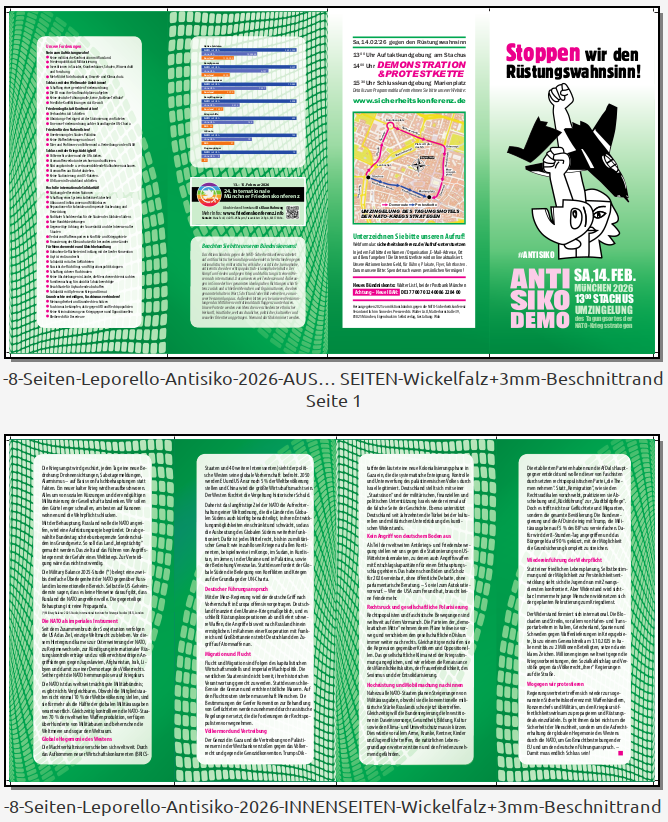
Aufruf 2026 bitte hier unterstützen ...
Aufruf als PDF - Aufruf 2026
Unterstützungen 2026
Spenden ausdrücklich benötigt:
GET ACTIVE AGAINST THE NATO WAR POLITICS




"Um die Organisatoren der Konferenz herum hat sich inzwischen ein Apparat gebildet, der zunehmend als außen- und militärpolitischer Think-Tank auftritt"
--------
"... Darüber hinaus fehle in der Bundesrepublik eine 'gesellschaftliche Unbefangenheit des Umgangs mit den Streitkräften'. ..."
- GFP 7.10.2020
Berlin: 10.1.2026 Rosa-Luxemburg-Konferenz